If you’ve never had a credit card, applying for one is a little unnerving. You don’t know your score yet (you might not even have one), and half the cards on Chase’s website look like they were built for someone with ten years of credit behind them. That’s the problem this guide solves: figuring out which Chase card will actually approve a beginner and which ones you should wait on.
Not every Chase card works for a first-timer. Some flat out require a credit score most beginners haven’t built yet. Others carry annual fees that quietly cancel out whatever rewards you’d earn in year one. Below are the best Chase credit card options for beginners, what they actually cost, and how to tell which one fits you.
What Makes a Credit Card Good for Beginners
A good starter card really only needs to do three things. Approve people with thin or no credit file. There is no charge to hold, so you can explore how this works without any risk. And report your payments to the three credit bureaus, because that’s the part that actually moves your score.
Interest rate matters less here than people assume, as long as you pay in full each month. What matters more is whether the card gives you room to grow. A card that reviews you for a higher limit after six months of on-time payments is quietly doing you a favor, since that limit increase lowers your utilization ratio, one of the bigger levers in your credit score.
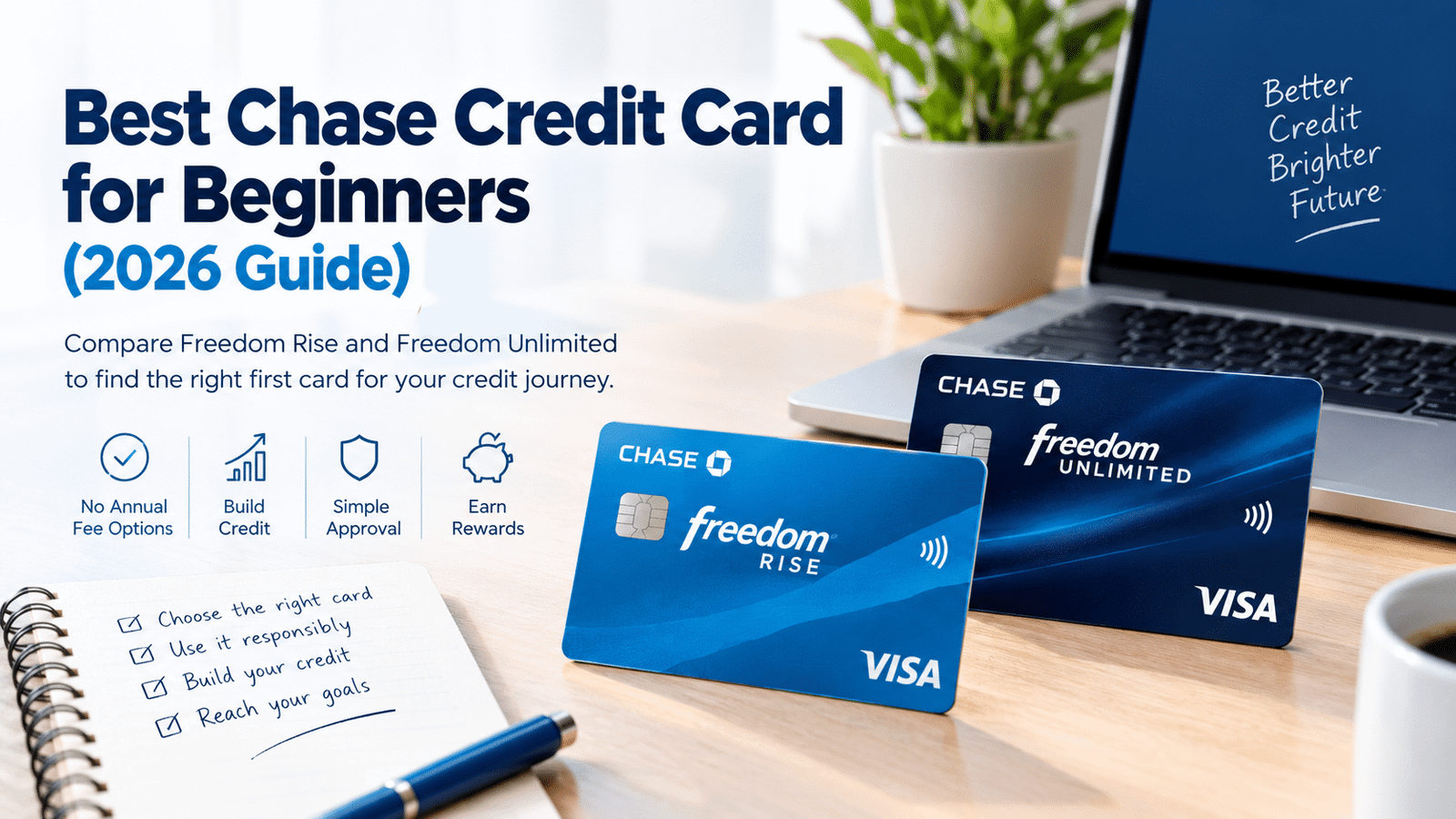
Chase Freedom Rise: Built for People with No Credit
This is the one card in the whole Chase lineup that doesn’t ask for a credit history to begin with. If you’ve genuinely never had a card, start here. Chase mentions that having a checking or savings account with at least $250 in it can help your approval odds. It’s not required, but it’s an easy box to check before you apply.
Rewards are simple: 1.5% cash back on everything, no categories to remember, and no cap on how much you can earn. Set up automatic payments in the first three months, and Chase throws in a $25 statement credit, which isn’t much, but it nudges you into the habit that matters most: paying on time. No annual fee. And Chase looks at raising your limit after just six months, which is faster than most starter cards bother to offer.
Here’s the catch. The interest rate runs higher than some other options, so this card only makes sense if you’re paying the statement balance off in full every month, no exceptions. Carry a balance on this card (or honestly, any starter card), and the interest will eat every bit of cash back you earned, and then some.
Chase Freedom Unlimited for Beginners with Some Credit History
Do you have a few months of credit under your belt already? This one’s worth a look. No annual fee, 1.5% back on everyday spending, 3% on dining and drugstores, and 5% on travel booked through Chase. There’s also a 0% intro APR on purchases and balance transfers for a while after you open the account, which is a decent cushion if something unexpected comes up early on.
The catch: it usually wants good to excellent credit, so it’s not where someone with zero credit history starts. But if you’re graduating from a secured card, coming off a co-signed account, or just have a bit of history already, this is one of the better no-fee cards out there. The welcome bonus moves around a lot too; I’ve seen it as low as $200 and as high as $300 depending on when Chase is running a promo, so check the current offer on their site before you apply. Don’t apply based on a number you saw in an article from a few months back.
Chase Sapphire vs Chase Freedom: Which One Fits a Beginner
Sapphire Preferred is a travel card, $95 a year, and it wants a credit score most beginners simply don’t have yet. It pays out better on travel and dining than either Freedom card. But that fee only makes sense once your spending actually uses the perks.
Honestly, for a first card, skip Sapphire. Both Freedom cards cost nothing to hold, and Sapphire asks you to pay up front for perks you probably won’t use much in year one anyway. Keep Sapphire on the shelf until your score and your spending habits catch up to it.
How to Build Credit with Chase
Truth is, the credit card itself is far less important than how you handle it. Never go above a 30% utilization ratio, but the lower you keep it the better, since a high utilization will kill your score regardless of whether you pay on time or not. Make sure to enable auto-pay at the very least for the minimum amount to prevent a forgotten due date from being a 30 day late payment forever on your report.
Chase reports to Equifax, Experian, and TransUnion each month. Stick with on-time payments, and most people see their score move within six to twelve months, though how much depends on everything else in your file. Worth checking your reports once a year at AnnualCreditReport.com too. It’s the only site the law actually requires to give them to you free.
First Credit Card Requirements You Need to Know
You’ll need to be 18 to apply. In case you are younger than 21 years old, you will have to prove your income or provide a co-signer. It is not a Chase requirement but a law imposed by the Credit CARD Act of 2009 and enforced by the Consumer Financial Protection Bureau. Other requirements are: a Social Security Number or Individual Taxpayer Identification Number, US mailing address, and some income.Chase doesn’t publish a minimum credit score for Freedom Rise. Makes sense, since the whole point of the card is that you might not have one yet.
No Annual Fee Chase Card Options at a Glance
Freedom Rise and Freedom Unlimited are both $0 a year. Low risk either way. Freedom Flex is also fee-free and adds rotating 5% categories each quarter, but it wants stronger credit than Rise does, so it’s more of a second-card option than a first one. Offers on all of these shift throughout the year, so it’s worth bookmarking FinanceCash.info‘s guide to the best Chase credit card for beginners and checking back before you apply.
Getting Started the Right Way
Don’t chase the biggest welcome bonus here. Chase a card that reports to the bureaus, costs nothing, and leaves room to grow with you. No credit file at all? Freedom Rise. Already have some history? Freedom Unlimited earns more without charging you for it. Check the current terms on Chase’s own site, apply for one, use it for a few months, then think about a second card. More on getting started as a first-time cardholder over at FinanceCash.info.
Frequently Asked Questions
What is the easiest Chase credit card to get approved for with no credit?
Chase Freedom Rise is designed for applicants with no credit history. Having a Chase checking or savings account with at least $250 can improve your approval odds, though it is not required.
Does Chase Freedom Rise charge an annual fee?
No.There is no annual fee for the Chase Freedom Rise Card, just like all other cards in the Freedom category, which means that it is a cost-effective way to start earning credit.
How long does it take to earn credit with a Chase card?
Many individuals experience significant improvements in their scores six to twelve months after they start using the card and maintain their credit limit, but the actual timeframe will depend on your credit profile.
Is Chase Freedom Unlimited good for beginners?
Beginners who already have some credit history can greatly benefit from it.