
You’ve got $40 left after rent, groceries, and gas this month, and somehow you’re supposed to be building wealth too. Every finance influencer online seems to assume you’ve got a spare $10,000 sitting around. You don’t, and that’s exactly why you need to know how to start investing with little money, not with money you don’t have yet.
You can open a real investment account with $5. Not a savings account, an actual brokerage account where your money grows. I used to assume there was some hidden minimum nobody told you about. There isn’t, not anymore. The amount you start with matters way less than people assume. Starting is the part that moves the needle.
You Don’t Need Thousands to Start
For decades, investing meant calling a broker, writing a check for a few thousand dollars, and hoping you picked the right stock. That world is mostly gone. Most online brokers dropped their account minimums to zero years ago, and plenty of apps will let you begin with whatever’s sitting in your checking account, even if that’s $12.
The old advice, “Wait until you have real money saved up,” actually costs you money the longer you follow it. Every month you wait is a month your investment isn’t growing.
Micro-Investing Apps Make It Easy
This is what micro-investing apps are made for. Acorns rounds up the transactions to the nearest dollar and invests the difference. You buy a $4.50 cup of coffee, but $0.50 is saved in your investment account automatically.
Robo-advisors do something similar, though with a bit more thinking behind it. Answer a few questions about your goals and your stomach for risk, and the app assembles a diversified portfolio and keeps it balanced for you. It’s not exciting that nobody brags about their robo-advisor at a party but that’s kind of the point.Wealthfront and Betterment are two of the bigger names, and both will take you on with far less money than you’d guess.
I wouldn’t stop learning how investing works just because an app handles it for you. But if the alternative is doing nothing because the whole thing feels overwhelming, a micro-investing app is a genuinely decent place to build the habit before you graduate to picking things yourself.
Index Funds for Beginners: The Simple Path
If you only remember one thing from this article, make it this. Index funds for beginners are usually the smartest first move you can make, and they’re a lot less complicated than they sound.
An index fund is just a basket of stocks bundled together, built to match the performance of the market as a whole instead of trying to beat it. Instead of betting your $50 on one company that might tank next quarter, you’re spreading it across hundreds of companies at once. Historically, a low-cost index fund has outperformed most actively managed funds over long stretches of time, and you’re not paying someone a hefty fee to pick stocks for you. The SEC’s Investor.gov has a decent plain-English breakdown if you want to see how funds like this are actually built under the hood.
You can find low-cost index funds through nearly any major brokerage, and most will let you buy in for the price of a single share, sometimes under $100 to start.
Fractional Shares Let You Buy a Slice of Anything
You want to invest in a company, but one share costs $600, and you’ve only got $80. That used to just be the end of the conversation. Fractional shares changed it.
With fractional shares, you buy a literal slice of an expensive stock instead of needing the full share price upfront. Want $20 worth of a company trading at $900 a share? Entirely doable now, and most major apps support it without any hoops. It’s opened the door on stocks that would’ve been completely off limits to a small investor a decade ago.
Get Your 401k Employer Match First
Before you put a single extra dollar anywhere else, check whether your employer offers a 401k match. If they do, and you’re not contributing enough to get the full amount, that’s money you’re just leaving behind.
Say your employer matches 50 percent of what you contribute, up to 6 percent of your paycheck. Put in that 6 percent and they’re handing you an instant 3 percent raise, basically, for saving money you’d probably have set aside anyway. Nothing else on this list, no app, no fund, competes with a guaranteed 50 percent return on day one. FinanceCash breaks down how matching and vesting actually work if your plan’s rules are confusing you, and if you want the bigger picture on how 401(k)s fit into retirement saving generally, the IRS’s retirement plan guidance is a solid, if dry, place to check the fine print.
Why Compound Interest Is Your Best Friend
Starting small today beats starting big later, and compound interest is the whole reason why. Your investment earnings start generating their own earnings, year after year, so the growth speeds up the longer the money just sits there.
Put $50 a month into an index fund averaging 8 percent a year, and 30 years later you’re sitting on roughly $75,000, even though you only ever put in $18,000 yourself. That $57,000 gap is compound interest doing the actual work while you weren’t paying attention to it. It’s also why waiting for a bigger paycheck before you start usually costs more than it saves. Time in the market does more heavy lifting than the size of your first deposit ever will.
Where This Actually Leaves You
You don’t need a financial advisor or a windfall to get going, just a few dollars and the willingness to actually open the account instead of bookmarking another article about it. Grab your full 401k match if there’s one sitting on the table, then put whatever’s left into a low-cost index fund or a couple of fractional shares and leave it alone for a while.
For a deeper walk-through of how to start investing with little money, including which apps keep their fees low and which ones quietly don’t, FinanceCash has a full guide worth reading before you open your first account.
FAQ
How much money do I actually need to start investing?
As little as $1 to $5 on most apps and brokers these days. The starting number matters far less than actually building the habit of putting something in regularly.
Are micro-investing apps safe?
Acorns, Betterment, and Wealthfront are all regulated firms and have SIPC insurance coverage up to $500,000 in case the brokerage firm goes bankrupt. That doesn’t stop your balance from moving up or down with the market, though; that’s normal and expected.
What’s the difference between an index fund and a single stock?
A single stock ties everything to one company’s fate.The index fund allows you to invest in hundreds of companies at once, and a poor quarterly performance of just one company doesn’t really bother you.
To Invest or Pay Off Debt First?
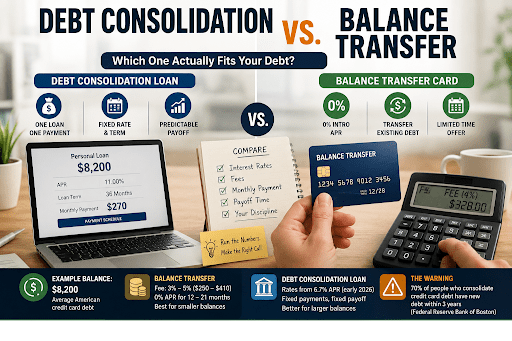
If you have an option for the full 401k match at work, take advantage of it because it’s pretty dumb not to do it. After that, credit card debt should be your priority over any additional investment.
Can I lose money investing small amounts?
Any single investment can drop in value, yes. Spreading your money across something diversified like an index fund cuts that risk down considerably, though it never disappears completely, and it shouldn’t. Risk is part of why investing pays better than a savings account in the first place.