Say you have a credit card with a $1,000 limit. You buy a phone case, grab some groceries, and pay a bill. Your balance climbs to $400. You feel fine about it; the limit is $1,000, after all.
But that $400 balance is doing something you probably haven’t noticed. It could be quietly capping your credit score, and nothing on your statement will tell you that directly.
That’s credit utilization. The name sounds like it belongs in a finance textbook, but it’s math you can do in your head. Once you understand it, you can use it in your favor instead of tripping over it by accident.
What Is Credit Utilization?
The amount of credit that you’re utilizing depends on the amount of credit you actually have. Imagine filling up a gas tank that can hold 10 gallons and has 3 gallons in it. That’s 30 percent. Credit works the same way as dollars instead of gas.
Lenders watch this number because it tells them something payment history can’t. A low number says you’ve got room to spare. A high number says you’re leaning on your limit, which reads as a risk to anyone deciding whether to extend you more credit.
Worth knowing: this single number makes up close to 30 percent of your FICO score, second only to payment history. Miss it, and your score can drag even if you’ve never been late on a bill.
How to Calculate Your Credit Utilization Ratio
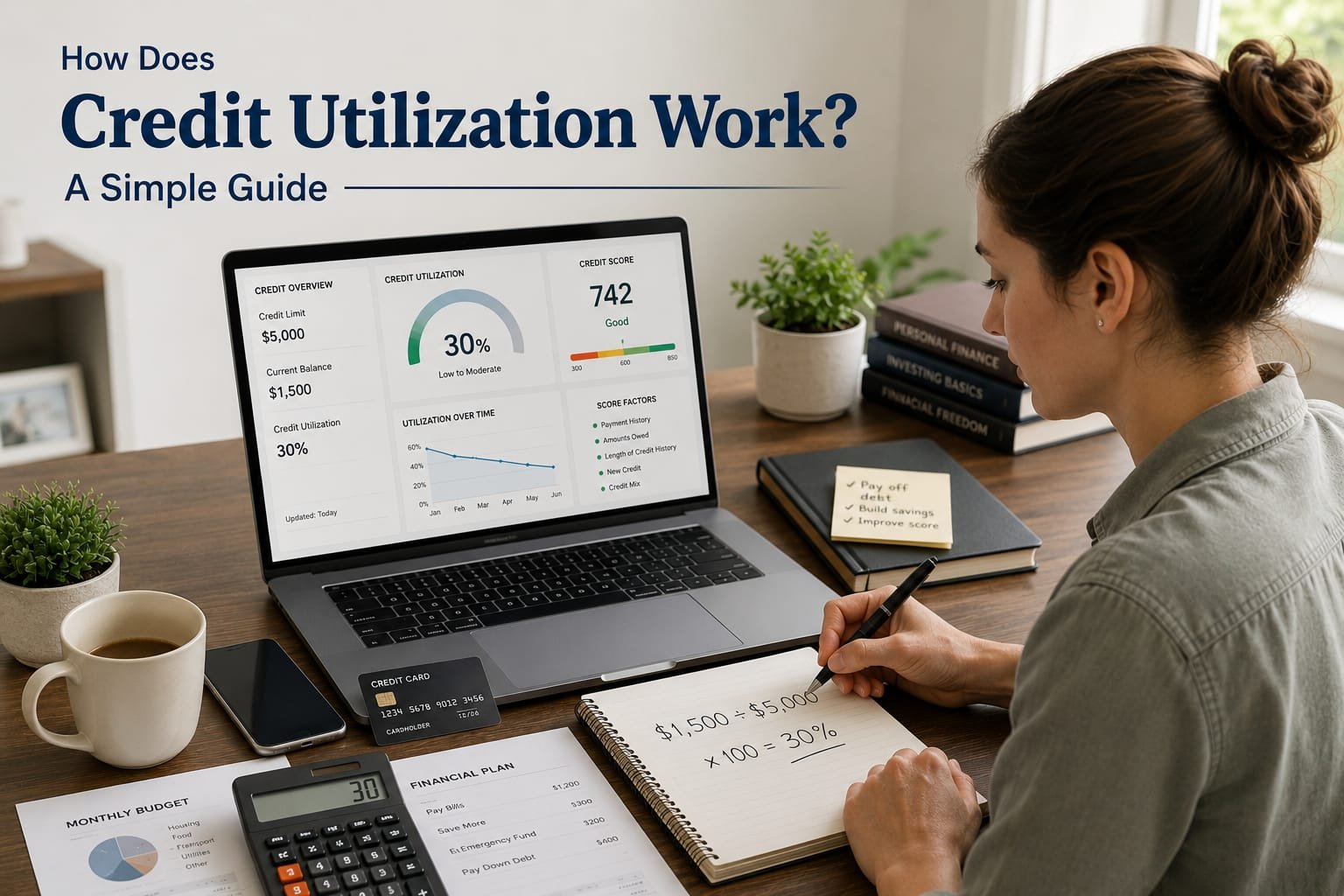
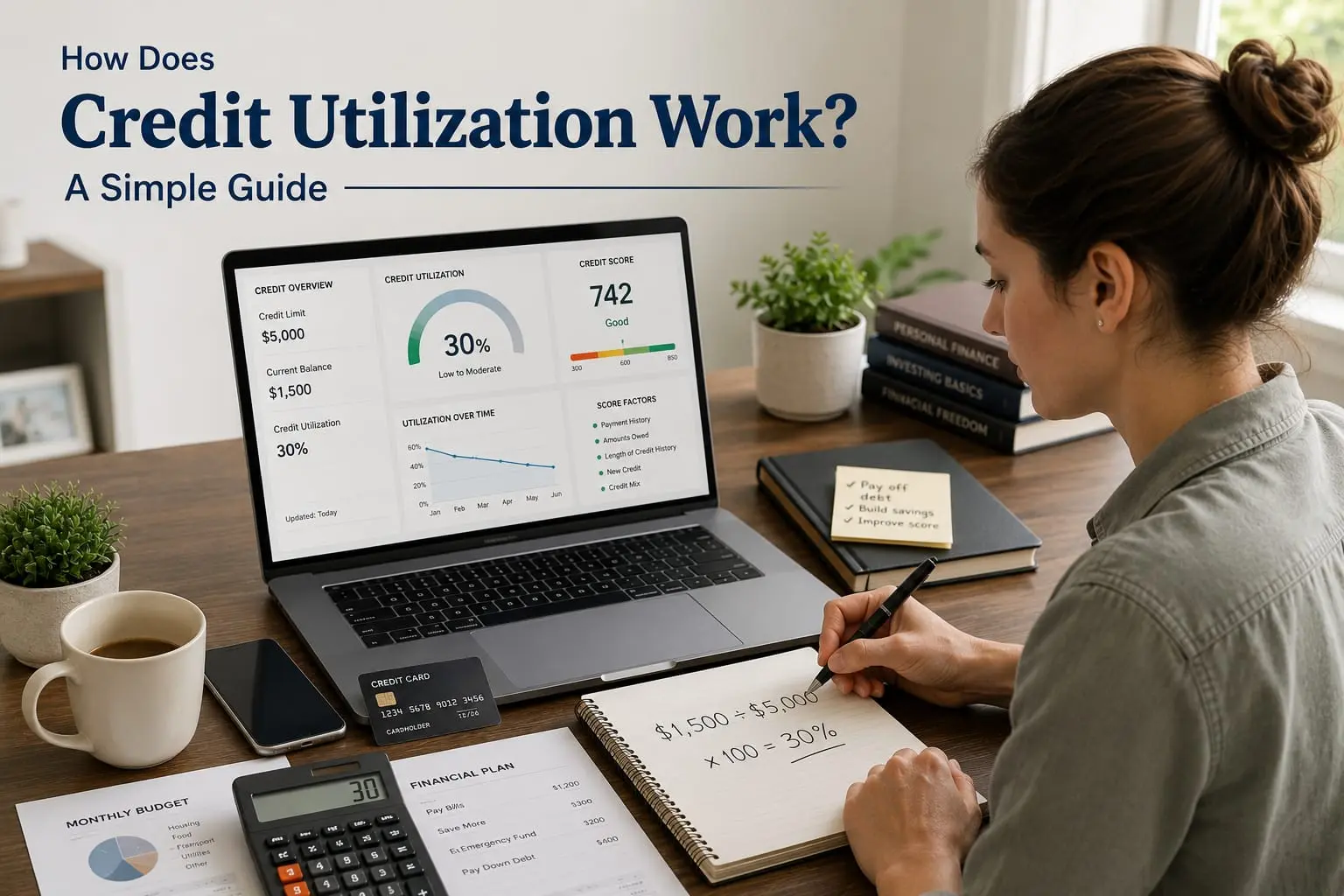
The credit utilization ratio formula: total balances divided by total credit limits, times 100.
A quick example with real numbers.
- Card A: Credit limit of $2,000; Credit balance of $600
- Card B: Credit limit of $3,000; credit balance of $400
Total credit balance: $600 + $400 = $1,000
Total credit limit: $2,000 + $3,000
No app, no calculator, no spreadsheet. Once you know how to calculate your credit utilization, you can check it any time straight off your last statement.
What Is a Good Credit Utilization Ratio?
Most advice says stay under 30 percent. If you really care about getting an excellent grade rather than a good one, you should think of 30 percent as a cliff’s edge, not somewhere to make camp by. The folks who get grades in the 800 range usually hang around the 7 or 10 percent range.
The part that confuses people is that 0 percent isn’t automatically the winning move either. A zero balance can make it seem like you’re not using credit, which doesn’t help lenders. A small balance, paid off in full, tends to score better than none.
Per-Card Utilization vs. Overall Utilization
Almost everyone misses this: your utilization gets measured two ways, not one.
Overall utilization adds up every balance and every limit across all your cards, as in the example above. Per-card utilization looks at each card on its own.
This is a bigger deal than you might think. It’s possible to have three cards that have lots of room left over, but if one of those cards is at 90 percent, it will still bring down your score. A healthy-looking overall number won’t cover for it.
So if you’re wondering how much of your credit limit you should use, the answer applies to every card individually, not just the combined total. Check them all, not just the sum.
How to Lower Your Credit Utilization
If your number’s higher than you’d like, a few moves actually shift it.
Pay more than once a month. Card issuers report your balance on your statement closing date, not your due date. Pay a week or two before that date, and your reported balance drops before it ever reaches the bureaus.
Ask for a higher limit. If your income’s grown since you opened the card, some issuers will raise it with one call or a request through the app. More room means a lower ratio—as long as your spending doesn’t creep up to match it.
Spread purchases across cards you already have instead of loading up one. It keeps any single card from climbing too high on its own.
Pay down balances ahead of a big expense if you can see it coming. Clearing room in advance beats scrambling after the charge hits.
A savings cushion helps here more than people expect, too. When you’ve got cash set aside for the unexpected, you stop reaching for a card every time something comes up. Building a dedicated buffer fund is one way to keep a surprise bill from spiking your utilization overnight.
Credit Utilization and Your Credit Score
Credit utilization and your credit score move together faster than most other factors. Payment history takes years to build. Utilization can shift within a single billing cycle which cuts both ways. It can hurt you fast, and it can recover fast too.
Pay down a balance today, and by the time your next statement closes, your score could already reflect it. If your utilization is high right now, that’s genuinely good news you’re not stuck waiting years to see it move.
The Consumer Financial Protection Bureau lists credit utilization among the core factors credit scoring models weigh, alongside payment history. Get both right, and you’re in solid shape.
A Real Example: Putting It All Together
Maria has one credit card, $5,000 limit, and normally carries a $1,500 balance 30 percent utilization.She wants a new couch for $800 and doesn’t want her score to take the hit.
Instead of charging it and pushing her balance to $2,300, she pulls $800 from a savings account she’d been building for exactly this kind of purchase. Her utilization stays right where it was, and she skips the interest charges too. Decisions like that, made ahead of time, are what keep a ratio steady month after month.
Your Next Step
Pull up your last statement and run the math. Add your balances, add your limits, and divide by 100. That one number tells you exactly where you stand and exactly what to fix first. A payment made a week before your statement closes can move your score faster than almost anything else on this list.
FAQ Section
What is a good credit utilization rate?
Well, most professionals advise that you keep it below 30%, while those who have good credit rates normally average about 7 or 10%. Lower generally helps, but a small balance beats a zero balance.
How do I calculate my credit utilization ratio?
Add up all your credit card balances, then add up all your credit limits. Divide the balance total by the limit total and multiply by 100 to get your percentage.
Does credit utilization update every month?
Yes. It typically updates when your card issuer reports your balance to the credit bureaus, usually around your statement closing date each month.
Can paying off my card twice a month help my score?
Yes. Paying before your statement closing date lowers the balance that gets reported, which can lower your utilization and help your score faster than waiting for the due date.
Is 0 percent utilization the best score?
Not necessarily. A 0 percent balance can make it look like you’re not using credit at all. A small balance paid off in full each month often scores better.