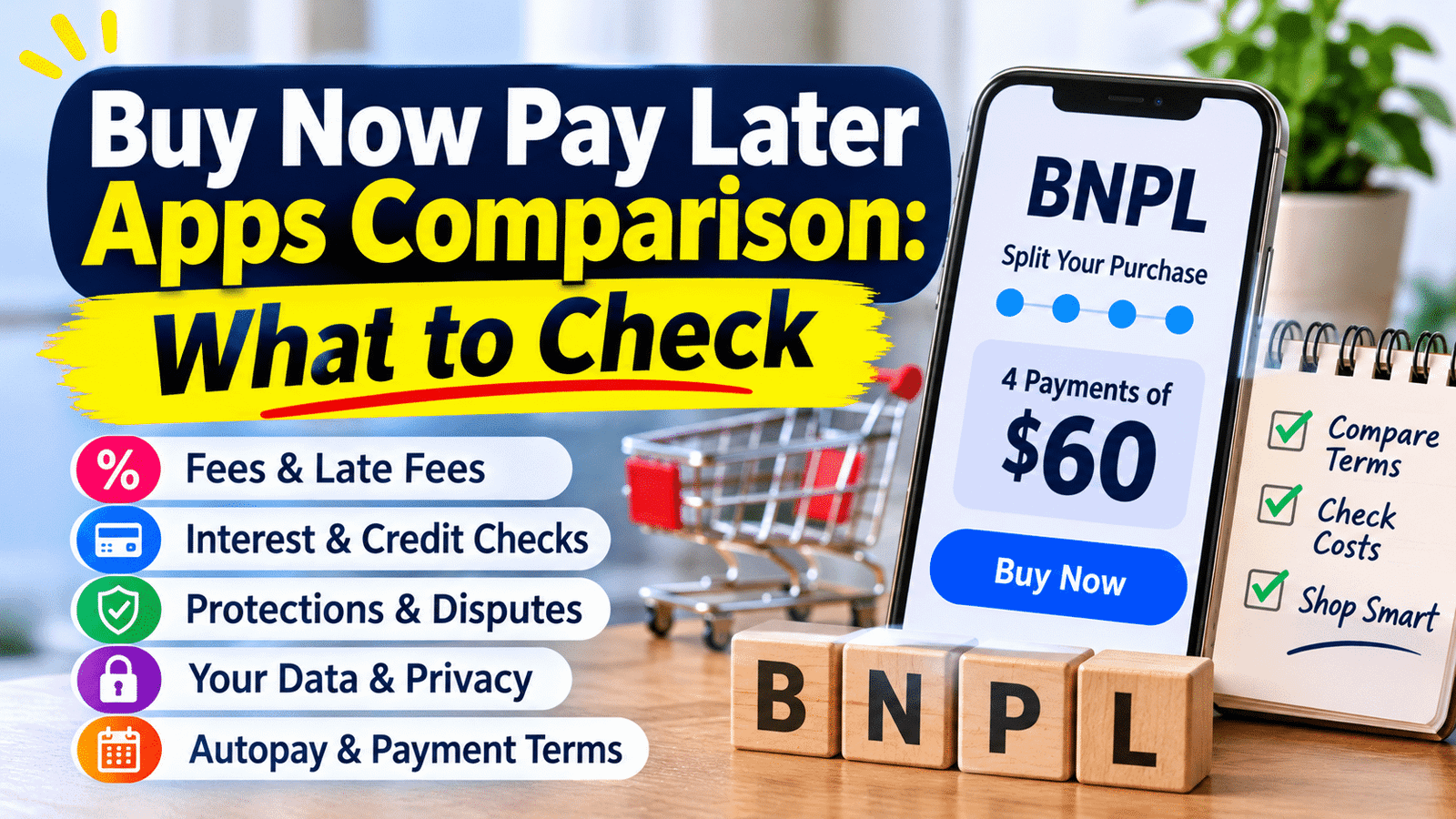
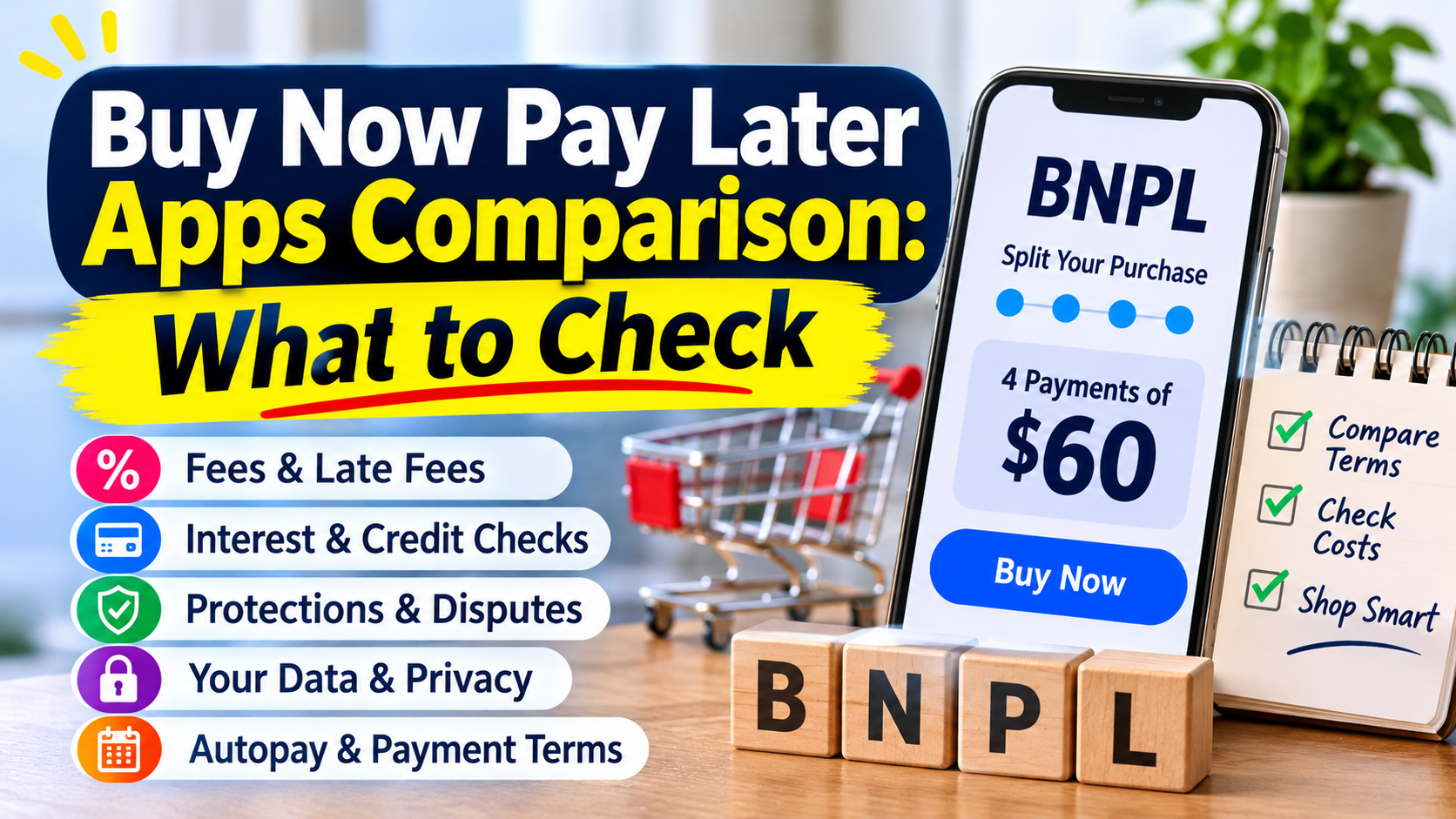
You’re at the checkout. The total is $240, and a little button says you can split it into four payments of $60. No big upfront cost. It feels easy. Then you spot a second button from a different app, with slightly different wording. Which one is better? And is either one a good idea?
This buy now, pay later app comparison helps you answer that with a short list of things to check. I will not give an order to applications nor will I even name some of them. The wording may vary from time to time and it is impossible for me to check if the terminology used is still relevant. However, I can tell you what kind of results the U.S. authorities have received and what to compare. I am not your financial consultant.
What these apps do
The Consumer Financial Protection Bureau is responsible for regulating the service called “buy now, pay later” that enables customers to buy products right away and pay for them at a later date. The report released on September 15, 2022, states that “pay in 4” method is the most common type of BNPL. It involves upfront purchases and repayment within four installments, where the first installment serves as the down payment.You can read the CFPB study on BNPL growth.
The CFPB also said BNPL grew fast. Five firms that have been surveyed issued 180 million loans amounting to more than $24 billion in 2021, which is almost ten times the volume in 2019. It’s old data; do not rely on it for the current market.
Why compare features, not brand names?
A buy now, pay later app comparison built on logos goes stale quickly. Fees, limits, and rules change. So I’d compare what matters, one item at a time. The checks below come from the CFPB’s findings, plus my own suggestions where I say so.
Check 1: What happens when you’re late
“Interest-free” doesn’t always mean “fee-free.” The CFPB has observed that default payments lead to imposition of late fees. The agency noted that the percentage of users who have been charged at least one late fee increased to 10.5% in 2021 from 7.8% in 2020. The agency also noted that some companies impose multiple late fees for a single default payment.
When comparing any Buy Now Pay Later app, one should consider: how much is the late fee and can there be multiple charges on the same default payment?
Check 2: Does it charge interest?
Pay in 4 is described as interest-free by the CFPB. But I’ve seen longer plans advertised, and the sources I read don’t cover them. From my own general knowledge, longer plans may carry interest, so read the cost before you accept. If a plan does charge interest, compare it with your credit card rate. A CFPB survey report estimates that a majority of BNPL borrowers would face card rates between 19 and 23 percent a year if they had used a card instead. That’s an estimate about a group, not about you.
Check 3: Credit checks and credit reports
Does the app check your credit before approving you?Does it disclose payments made to the credit bureaus? The CFPB study found that most BNPL lenders did not disclose to the credit bureaus, which means that other lenders would not know about the debt. This was back in 2022; therefore, we should check with each application individually.
Check 4: Protections if something goes wrong
Credit cards come with federal billing-dispute rights. BNPL has been less clear. The CFPB’s 2022 study warned that some products may lack standard cost disclosures and dispute rights.
The rules are also in flux. In 2025, the CFPB said it did not intend to reissue its BNPL interpretive rule, which would have treated BNPL accounts more like credit cards. A June 20, 2025, post from Consumer Finance Monitor reports this, and it also states states may fill the gap, noting that New York added BNPL licensing requirements. So the protections you get may depend on your state and the app. So read what each app says about disputes and refunds before you buy.
Check 5: Autopay and your bank account
Some apps pull payments automatically. The CFPB said some products may require you to opt in to autopay. If your bank balance runs low, a payment pulled at the wrong time can cause an overdraft fee. That’s my own caution, but it fits what the CFPB reported about BNPL users and overdrafts. Ask whether you can pick the payment date and whether you can pay manually.
Check 6: Your data
BNPL apps can learn a lot about your shopping. The CFPB warned that proprietary apps build detailed profiles of consumers’ habits, which may threaten privacy. Read what the app collects and who it shares it with.
Check 7: Returns
If you send something back, what happens to your plan? The CFPB reported that 13.7% of loans in 2021 involved at least some returned items. Ask how refunds work and how long it takes for your payments to adjust.
A simple comparison table
Copy this buy now pay later app comparison table into a note and fill it out for each app you’re considering.
What to compare What to look for: the amount of late fees and whether it can repeat interest. None for pay in 4, or the cost if there is any plan length and size The limits for your purchase Credit check and reporting Whether it checks or whether it reports autopay Can you choose the date or pay manually? Disputes and refunds How do you resolve a problem? Data use: What does it collect and share?
If an app can’t answer a row clearly, I’d skip it. That’s my own view.
Who tends to use BNPL
The CFPB’s Making Ends Meet report, published March 2, 2023, found that many BNPL users showed no clear signs of financial stress. But on average, borrowers also carried more debt, had lower credit scores, and were more likely to have trouble with other credit. The report adds that many of those differences existed before BNPL use began. The full CFPB Making Ends Meet report has more.
In plain words, BNPL isn’t automatically a trap, and it isn’t automatically safe. It depends on how you use it. That’s my own summary.
Warning signs that you’re using too much
These are my own signs, not from a source. You have several plans running at once. You use it for everyday needs like groceries. You’re not sure what you owe in total. You’ve missed a payment. The CFPB warns about “loan stacking,” where people take several loans from different lenders in a short time. If that sounds like you, pause and make a list of everything you owe. Our guide on how to pay off credit card debt fast has ideas that also apply to other debts.
Common mistakes
The greatest problem with an analysis of a comparison of “buy now pay later” apps would be comparing logos rather than terms. Other mistakes include not taking into account the late fee, stacking multiple loans, missing the autopay date, and purchasing products that you would not buy with cash.
Your next step
Before your next purchase, ask one question: could I pay for this in full today if I had to? If yes, a plan may be a choice, not a need. If no, think hard about whether to buy it. Either way, run your own buy now pay later app comparison with the table above and write down the total you’ll owe.
For more money tools and app guides, see our digital banking and fintech apps section. For any buy now pay later app comparison, the key is to look past the “interest-free” label to fees, protections, and privacy, and to borrow only what you can comfortably repay.
FAQ
What is the best app in a buy now, pay later app comparison?
I can’t name one. However, things change rapidly, and I have not verified the rules for every app. You can use the table above to see how any particular app fares in terms of fees, credit reporting, and consumer protections.
Is Buy Now Pay Later interest-free?
Pay in 4 is typically interest-free, per the CFPB, but late fees can apply. Longer plans may charge interest, so read the terms.
Does BNPL affect my credit score?
It depends on the app. The CFPB’s 2022 study found that most lenders did not report to the big bureaus, but check each app’s current policy.
Do BNPL apps have the same protections as credit cards?
Not necessarily. The CFPB said in 2025 it would not reissue its BNPL rule, and protections vary by state and app.
Is BNPL a good idea?
It really all depends on your budget and how you do things. The CFPB found many users who were not under any visible stress, but still noted late fees and stacking.