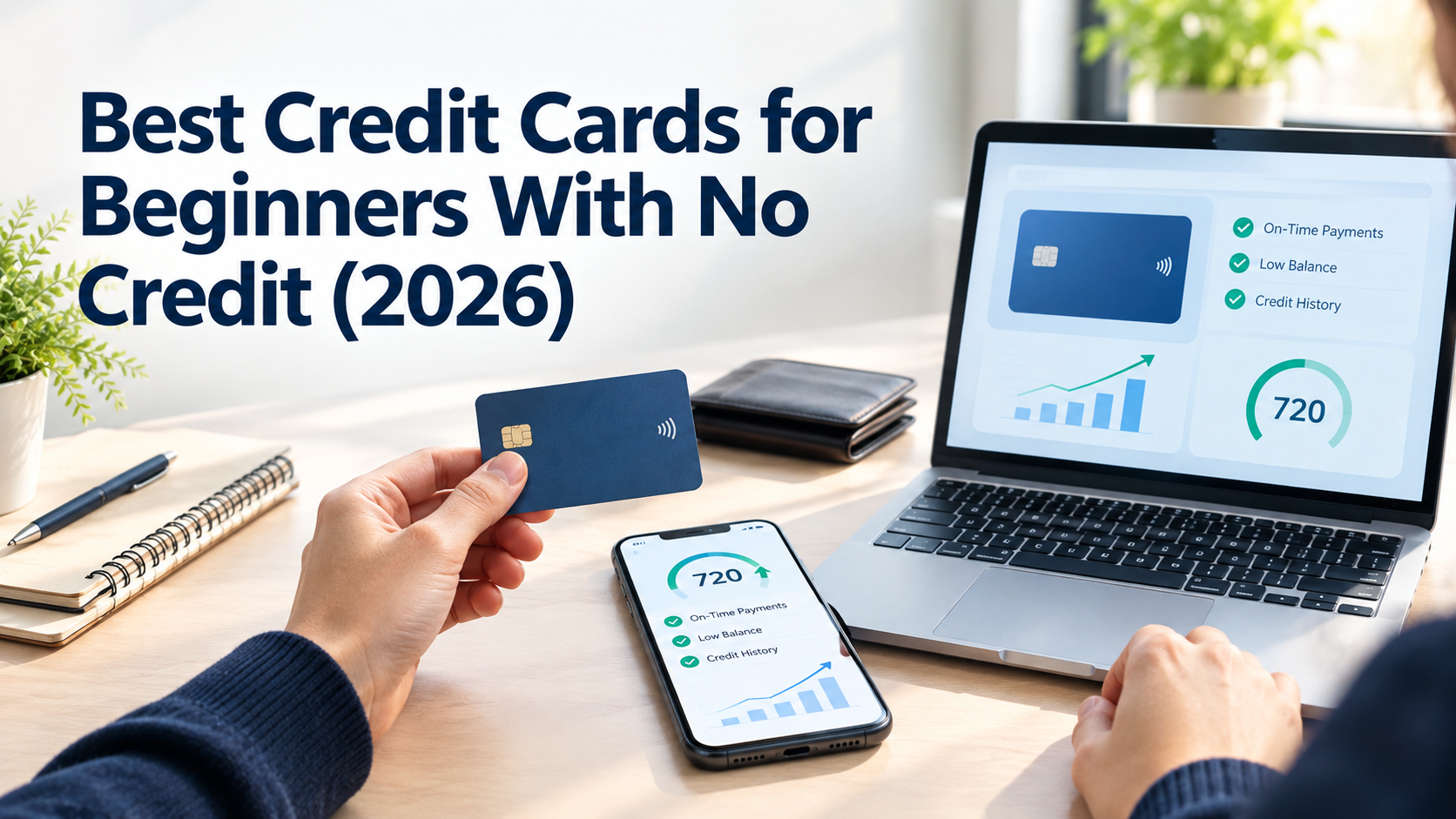
You’re 19. You walk into a bank, ask for a card, and the clerk taps at a keyboard for a bit. Then comes the head shake. No credit history. You’ve never missed a payment on anything, but that doesn’t count, because nobody ever reported it. Kind of unfair, right? It’s how the system works, though. You need credit to get credit. The best credit cards for beginners with no credit exist to get you past that wall. Banks approve you with a blank file, the fees stay low, and every on-time payment gets reported to the credit bureaus. I’ll walk through the card types, a few names worth a look, and the habits that keep you out of trouble. What “No Credit” Really Means First, a quick fix on words. Having no credit isn’t the same as having bad credit. Bad credit is a history of late payments. No credit is an empty page. A lender looking at an empty page can’t tell if you’re careful or careless, so it plays safe and says no. Your page is kept by Experian, Equifax, and TransUnion. It gets its first line when a lender reports an account in your name. FICO generally wants about six months of that account being open before it gives you a score, so expect to wait. Credit cards for no credit history are the fastest door in. The best credit cards for beginners with no credit just make the wait cheaper. Types of Starter Credit Cards Three kinds cover most of the best credit cards for beginners with no credit. Secured Credit Cards A secured credit card wants cash first. Put down $200, and your limit is usually $200. That deposit is the bank’s safety net, and it’s why approval is so common. Pay on time for a while, and some issuers give the money back and upgrade you. If a regular card has already said no, this is where I’d look. Student Credit Cards College students get their own group. Limits run low, but issuers know you’re young and your file is thin, so they plan for it. A few of these cards throw in cash back on everyday spending. Unsecured Starter Cards No deposit needed. Some banks will do this even with no history at all. The limit starts small, and the interest rate can sting. If you pay the full bill every month, you’ll never see that rate anyway. Best Credit Cards for Beginners With No Credit to Check First None of these fit everyone and offer change, so check the bank’s current terms first.Chase Freedom Rise is unsecured with no annual fee and a flat 1.5% cash back. No credit history needed. Chase may also move you up to a better card later.Capital One Platinum takes limited, fair, or no history and charges no annual fee. It pays nothing back. Honestly, that’s fine for a first card. Building credit is the job. If you need a deposit card, Discover it Secured pays cash back, which plenty of secured cards skip. Capital One’s Secured Mastercard has no rewards and no annual fee, reports to all three bureaus, and can raise your limit after five on-time payments. Students can look at Discover It Student Cash Back. Among the best credit cards for beginners with no credit, I’d go unsecured first. Denied? A secured card builds credit the same way. It just takes a bit more cash up front. How to Pick the Right Card for You Start with the annual fee, and for a first card that number should be $0. After that, confirm the bank reports to all three bureaus. If it doesn’t, you’re paying on time for nobody. Interest rate is third on my list when you compare the best credit cards for beginners with no credit, since it barely matters if you clear the balance monthly. It matters a lot if you won’t. Walk away from setup fees and monthly fees. And try to find a card with an upgrade path, meaning a higher limit or a better card after six to twelve months. You skip a second application that way. More options are in our guides to the best credit cards for beginners, including other no-annual-fee credit cards. How to Use Your First Card the Smart Way Even the best credit cards for beginners with no credit do nothing if you pay late. Payment history is the biggest slice of a FICO score, 35%, so one missed date really does show. Set autopay for the minimum at least. Pay the whole balance when the bill comes. No interest, no drama.Keep your balance low too. Most experts say under 30% of your limit. On a $300 limit, that’s $90, and lower is better. What should you actually buy? Something boring that repeats. A $15 streaming plan works. Let autopay take care of it and forget it. The limit isn’t your money. The Consumer Financial Protection Bureau explains scores in plain English on its page about credit reports and scores if you want the longer version. Mistakes That Hurt New Credit Applying for five cards in one month is the classic move. Every application can leave a hard inquiry, and a bunch at once looks jumpy on a thin file. One card. Wait for the answer. Then think.Maxing it out is the other one. A limit feels like extra cash, but a full card drags your score down and racks up interest fast. And look at your reports. Errors do happen. AnnualCreditReport.com is the official free source. Check a few months in and make sure your new account actually shows up. Your Next Step So pick one card from the list, read the terms, and apply. Turn on autopay the same day. That’s really all; how to build credit from scratch looks like it at the start. If you want more help choosing, FinanceCash has more on the best credit cards for beginners with no credit. Pay on time, be patient, and
Best Chase Credit Card for Beginners: A Simple 2026 Guide
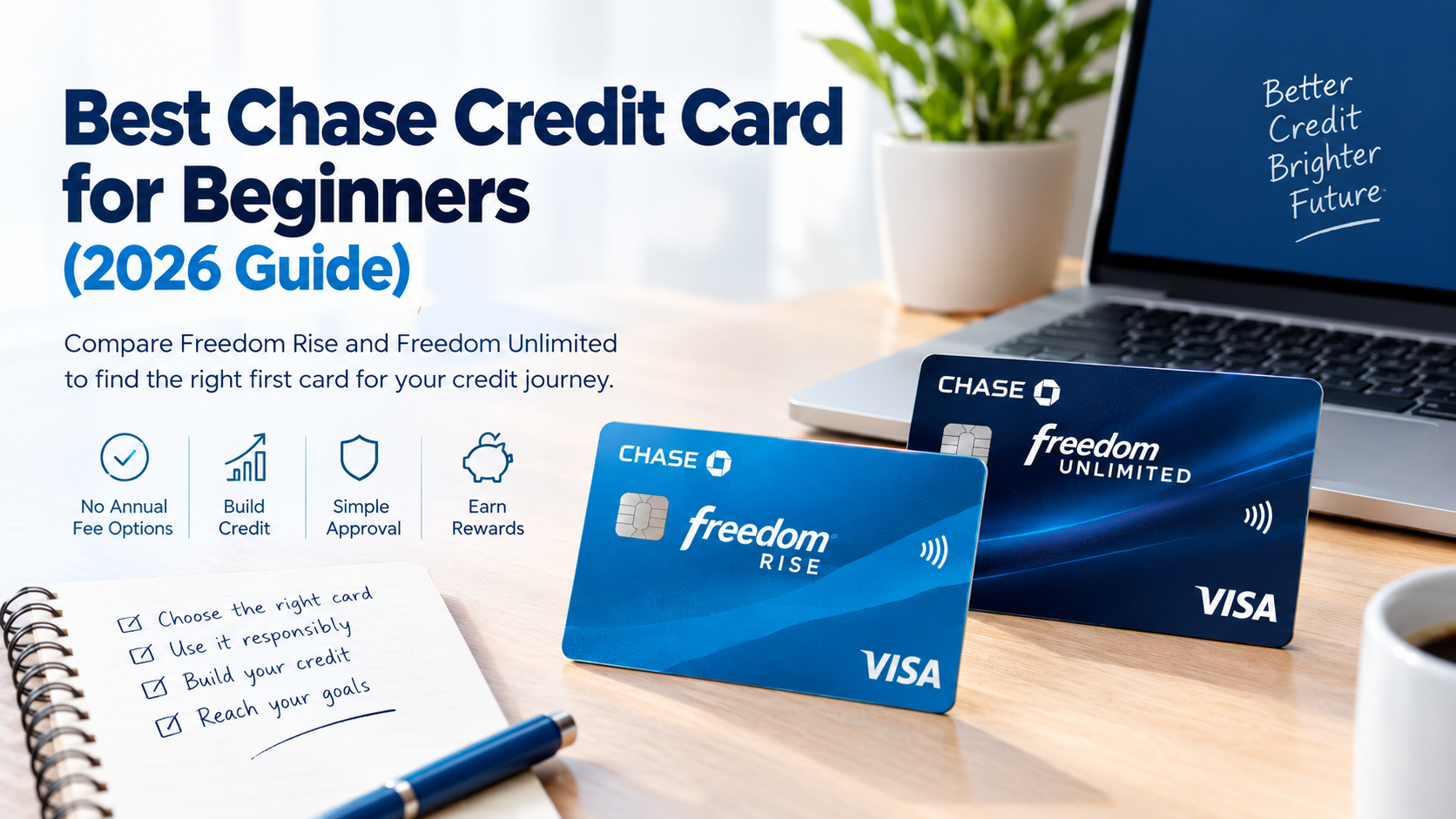
If you’ve never had a credit card, applying for one is a little unnerving. You don’t know your score yet (you might not even have one), and half the cards on Chase’s website look like they were built for someone with ten years of credit behind them. That’s the problem this guide solves: figuring out which Chase card will actually approve a beginner and which ones you should wait on. Not every Chase card works for a first-timer. Some flat out require a credit score most beginners haven’t built yet. Others carry annual fees that quietly cancel out whatever rewards you’d earn in year one. Below are the best Chase credit card options for beginners, what they actually cost, and how to tell which one fits you. What Makes a Credit Card Good for Beginners A good starter card really only needs to do three things. Approve people with thin or no credit file. There is no charge to hold, so you can explore how this works without any risk. And report your payments to the three credit bureaus, because that’s the part that actually moves your score. Interest rate matters less here than people assume, as long as you pay in full each month. What matters more is whether the card gives you room to grow. A card that reviews you for a higher limit after six months of on-time payments is quietly doing you a favor, since that limit increase lowers your utilization ratio, one of the bigger levers in your credit score. Chase Freedom Rise: Built for People with No Credit This is the one card in the whole Chase lineup that doesn’t ask for a credit history to begin with. If you’ve genuinely never had a card, start here. Chase mentions that having a checking or savings account with at least $250 in it can help your approval odds. It’s not required, but it’s an easy box to check before you apply. Rewards are simple: 1.5% cash back on everything, no categories to remember, and no cap on how much you can earn. Set up automatic payments in the first three months, and Chase throws in a $25 statement credit, which isn’t much, but it nudges you into the habit that matters most: paying on time. No annual fee. And Chase looks at raising your limit after just six months, which is faster than most starter cards bother to offer. Here’s the catch. The interest rate runs higher than some other options, so this card only makes sense if you’re paying the statement balance off in full every month, no exceptions. Carry a balance on this card (or honestly, any starter card), and the interest will eat every bit of cash back you earned, and then some. Chase Freedom Unlimited for Beginners with Some Credit History Do you have a few months of credit under your belt already? This one’s worth a look. No annual fee, 1.5% back on everyday spending, 3% on dining and drugstores, and 5% on travel booked through Chase. There’s also a 0% intro APR on purchases and balance transfers for a while after you open the account, which is a decent cushion if something unexpected comes up early on. The catch: it usually wants good to excellent credit, so it’s not where someone with zero credit history starts. But if you’re graduating from a secured card, coming off a co-signed account, or just have a bit of history already, this is one of the better no-fee cards out there. The welcome bonus moves around a lot too; I’ve seen it as low as $200 and as high as $300 depending on when Chase is running a promo, so check the current offer on their site before you apply. Don’t apply based on a number you saw in an article from a few months back. Chase Sapphire vs Chase Freedom: Which One Fits a Beginner Sapphire Preferred is a travel card, $95 a year, and it wants a credit score most beginners simply don’t have yet. It pays out better on travel and dining than either Freedom card. But that fee only makes sense once your spending actually uses the perks. Honestly, for a first card, skip Sapphire. Both Freedom cards cost nothing to hold, and Sapphire asks you to pay up front for perks you probably won’t use much in year one anyway. Keep Sapphire on the shelf until your score and your spending habits catch up to it. How to Build Credit with Chase Truth is, the credit card itself is far less important than how you handle it. Never go above a 30% utilization ratio, but the lower you keep it the better, since a high utilization will kill your score regardless of whether you pay on time or not. Make sure to enable auto-pay at the very least for the minimum amount to prevent a forgotten due date from being a 30 day late payment forever on your report. Chase reports to Equifax, Experian, and TransUnion each month. Stick with on-time payments, and most people see their score move within six to twelve months, though how much depends on everything else in your file. Worth checking your reports once a year at AnnualCreditReport.com too. It’s the only site the law actually requires to give them to you free. First Credit Card Requirements You Need to Know You’ll need to be 18 to apply. In case you are younger than 21 years old, you will have to prove your income or provide a co-signer. It is not a Chase requirement but a law imposed by the Credit CARD Act of 2009 and enforced by the Consumer Financial Protection Bureau. Other requirements are: a Social Security Number or Individual Taxpayer Identification Number, US mailing address, and some income.Chase doesn’t publish a minimum credit score for Freedom Rise. Makes sense, since the whole point of the card is that you might not have one yet. No Annual Fee Chase Card

How to Pay Off Credit Card Debt Fast
I checked my card balance, expecting it to be lower than last month. It wasn’t. Barely used the thing, and it still went up. That’s interesting, working quietly in the background while you sleep, eat dinner, whateverIf you have reached here to find out how to pay off credit card debt fast, then you must be familiar with this feeling. It is just like going on a treadmill when someone always pushes you a notch higher. One number stuck with me. The average card in the US charges over 20% interest right now. Six thousand dollars in debt, sitting there, costs around $1,400 a year in interest alone. Not a trip. Not new shoes. So here’s what actually works. Why the Balance Barely Moves Credit cards run on compound interest. You pay interest, then next month you pay interest on that interest too. A $10,000 balance at 24% can grow over $200 in a single month if all you send is the minimum. And minimums are set low on purpose, because the longer you carry a balance, the more the card company earns off you. Nothing personal. Just math that favors them. Once you see that, the guilt kind of fades and gets replaced by “Okay, what do I actually do about this?” Write Down What You Owe (All of It) Boring step, but skip it and the rest doesn’t work. Every card, balance, interest rate, and minimum payment. Notes app, napkin, back of a receipt doesn’t matter.This is something I did with three cards before, and I was physically sick when I saw all three put together. This is a natural response to something you have to see to believe. Avalanche, Snowball, or Whatever You’ll Actually Do Two methods get recommended constantly. I want to tell you that avalanche is obviously correct. And it is, on a spreadsheet. But if you’re actually trying to figure out how to pay off credit card debt fast, the method that gets finished beats the one that’s technically smarter and gets abandoned by March. Pick whichever one you won’t quit. Find Money You Didn’t Know You Had Vague advice like “find extra money” is useless until it gets specific. Pull up last month’s statement. There’s probably a subscription you forgot about, a couple takeout orders that added up, and a gym membership gathering dust since January. Even $150 a month, sent straight to your target card the day you get paid, moves the needle faster than you’d think. Pay yourself first. Before that money finds something else to become. Balance Transfer Cards Can Buy You Real Time Decent credit opens up balance transfer cards, and they’re worth a look. Some run 0% interest for six to twenty-one months while you chip away at what you owe. There’s a transfer fee, usually 3% to 5%, but stack that against months of 20%-plus interest and it’s often still the better deal. The catch is timing. Whatever’s left when the promo period ends starts racking up the regular rate again and fast. Worth running your numbers first. A debt payoff calculator on financecash. Info can show you whether the math actually works out before you apply for anything. Put the Cards Away for a While Yeah, I know, easier said than done. But new charges while you’re trying to pay off old ones just means you’re treading water with extra steps. Keep the accounts open if you’re worried about your credit history. Just switch to cash or a debit card for the day-to-day stuff. Let the credit cards sit in a drawer until the balance is actually gone. Watch It Shrink Update the numbers every month. There’s something genuinely satisfying about watching a balance drop that you should let yourself enjoy, because most of this process doesn’t feel good. Paper thermometer on the fridge, spreadsheet, or whatever works. The point is checking in often enough that the goal stays real instead of some someday thing. Start Today, Not Monday No trick to this. Know your real numbers, pick a method you’ll finish, free up whatever cash you can find, and repeat every month until it hits zero. Start with the list today if you can manage it. Then check out FinanceCash. info for calculators built around your actual numbers instead of some generic example. Frequently Asked Questions How fast can I pay off credit card debt? Depends entirely on your balance and how much extra you can throw at it. Most people see real movement in three to six months. Is an avalanche always better than a snowball? Mathematically, yes. Realistically, the method you finish wins. Plenty of people need the early wins to give them just to stay in the game. Will a balance transfer hurt my credit score? A small, temporary dip, usually. Most people recover fast once the transferred balance starts actually going down. Should I close a card once it’s paid off? Generally no. A paid-off card sitting open helps your credit history and utilization ratio. Just don’t let it tempt you back into a balance. What if I can’t afford more than the minimum right now? Start smaller than you think. Even an extra $20 toward your highest rate card helps over time. The Consumer Financial Protection Bureau points out that even modest extra payments chip away at your total interest cost.
How Does Credit Utilization Work? A Simple Guide
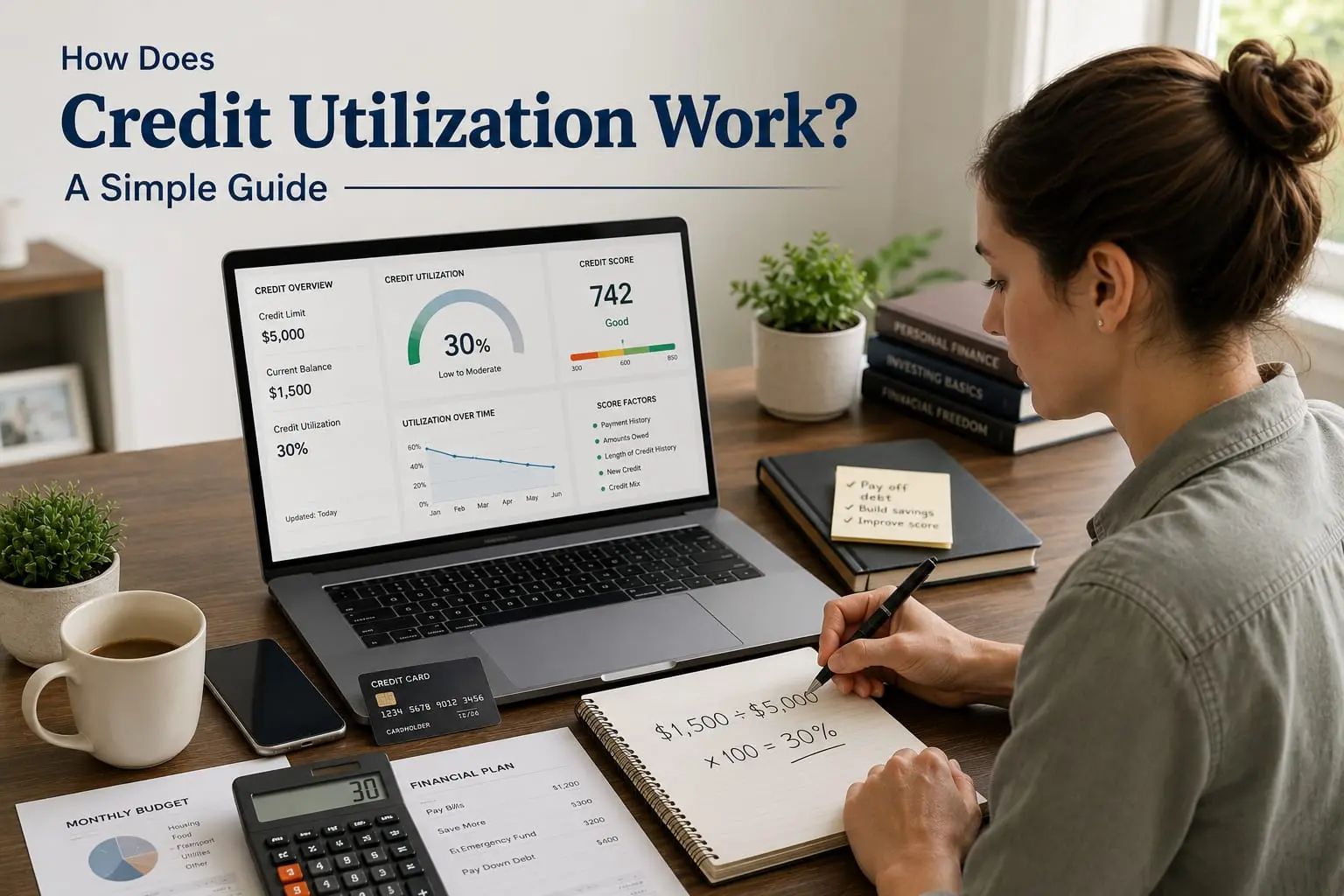
Say you have a credit card with a $1,000 limit. You buy a phone case, grab some groceries, and pay a bill. Your balance climbs to $400. You feel fine about it; the limit is $1,000, after all. But that $400 balance is doing something you probably haven’t noticed. It could be quietly capping your credit score, and nothing on your statement will tell you that directly. That’s credit utilization. The name sounds like it belongs in a finance textbook, but it’s math you can do in your head. Once you understand it, you can use it in your favor instead of tripping over it by accident. What Is Credit Utilization? The amount of credit that you’re utilizing depends on the amount of credit you actually have. Imagine filling up a gas tank that can hold 10 gallons and has 3 gallons in it. That’s 30 percent. Credit works the same way as dollars instead of gas. Lenders watch this number because it tells them something payment history can’t. A low number says you’ve got room to spare. A high number says you’re leaning on your limit, which reads as a risk to anyone deciding whether to extend you more credit. Worth knowing: this single number makes up close to 30 percent of your FICO score, second only to payment history. Miss it, and your score can drag even if you’ve never been late on a bill. How to Calculate Your Credit Utilization Ratio The credit utilization ratio formula: total balances divided by total credit limits, times 100. A quick example with real numbers. Total credit balance: $600 + $400 = $1,000 Total credit limit: $2,000 + $3,000 No app, no calculator, no spreadsheet. Once you know how to calculate your credit utilization, you can check it any time straight off your last statement. What Is a Good Credit Utilization Ratio? Most advice says stay under 30 percent. If you really care about getting an excellent grade rather than a good one, you should think of 30 percent as a cliff’s edge, not somewhere to make camp by. The folks who get grades in the 800 range usually hang around the 7 or 10 percent range. The part that confuses people is that 0 percent isn’t automatically the winning move either. A zero balance can make it seem like you’re not using credit, which doesn’t help lenders. A small balance, paid off in full, tends to score better than none. Per-Card Utilization vs. Overall Utilization Almost everyone misses this: your utilization gets measured two ways, not one. Overall utilization adds up every balance and every limit across all your cards, as in the example above. Per-card utilization looks at each card on its own. This is a bigger deal than you might think. It’s possible to have three cards that have lots of room left over, but if one of those cards is at 90 percent, it will still bring down your score. A healthy-looking overall number won’t cover for it. So if you’re wondering how much of your credit limit you should use, the answer applies to every card individually, not just the combined total. Check them all, not just the sum. How to Lower Your Credit Utilization If your number’s higher than you’d like, a few moves actually shift it. Pay more than once a month. Card issuers report your balance on your statement closing date, not your due date. Pay a week or two before that date, and your reported balance drops before it ever reaches the bureaus. Ask for a higher limit. If your income’s grown since you opened the card, some issuers will raise it with one call or a request through the app. More room means a lower ratio—as long as your spending doesn’t creep up to match it. Spread purchases across cards you already have instead of loading up one. It keeps any single card from climbing too high on its own. Pay down balances ahead of a big expense if you can see it coming. Clearing room in advance beats scrambling after the charge hits. A savings cushion helps here more than people expect, too. When you’ve got cash set aside for the unexpected, you stop reaching for a card every time something comes up. Building a dedicated buffer fund is one way to keep a surprise bill from spiking your utilization overnight. Credit Utilization and Your Credit Score Credit utilization and your credit score move together faster than most other factors. Payment history takes years to build. Utilization can shift within a single billing cycle which cuts both ways. It can hurt you fast, and it can recover fast too. Pay down a balance today, and by the time your next statement closes, your score could already reflect it. If your utilization is high right now, that’s genuinely good news you’re not stuck waiting years to see it move. The Consumer Financial Protection Bureau lists credit utilization among the core factors credit scoring models weigh, alongside payment history. Get both right, and you’re in solid shape. A Real Example: Putting It All Together Maria has one credit card, $5,000 limit, and normally carries a $1,500 balance 30 percent utilization.She wants a new couch for $800 and doesn’t want her score to take the hit. Instead of charging it and pushing her balance to $2,300, she pulls $800 from a savings account she’d been building for exactly this kind of purchase. Her utilization stays right where it was, and she skips the interest charges too. Decisions like that, made ahead of time, are what keep a ratio steady month after month. Your Next Step Pull up your last statement and run the math. Add your balances, add your limits, and divide by 100. That one number tells you exactly where you stand and exactly what to fix first. A payment made a week before your statement closes can move your score faster than almost anything else on this list. FAQ Section
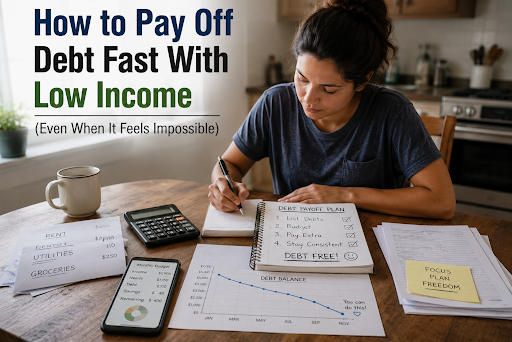
How to Pay Off Debt Fast With Low Income (Even When It Feels Impossible)
Maria works the morning shift at a diner in Toledo. She takes home about $1,900 a month, and until last spring, $310 of that was disappearing into two credit cards every single month. Most of it wasn’t even touching the balance. It was just interest, keeping the debt exactly where it was. If that sounds familiar, you’ve probably already heard the standard advice and rolled your eyes at it. Skip the coffee. Cancel a streaming service. Sure, that might free up ten bucks. It’s not going to make a dent in $4,000. So here’s how to pay off debt fast with low income, minus the parts that only work if you already have money to spare. Start By Writing Down What You Actually Owe This step gets skipped a lot, mostly because people don’t want to see the total. I get it. Maria didn’t either. But grab a notebook, or a blank note on your phone, and list every debt. Creditor, balance, interest rate, minimum payment. Include the $200 you owe your sister. Include the medical bill you’ve been ignoring in a kitchen drawer. When Maria finally added hers up, it came to $6,380. Writing it down didn’t make the number smaller. It just stopped being a fog she was avoiding. Once you can actually see what you’re dealing with, you stop reacting to bills and start working a plan instead. Build a Budget That Isn’t Fantasy A lot of budgeting advice assumes you have room to breathe. If you’re working with a low income, your budget has to be tighter and a little more uncomfortable, at least for a while. Three categories: needs, debt, and everything else. Needs first. Rent, utilities, groceries, and getting to work. Debt payments second, and they need a real dollar amount attached, not “whatever’s left over. ” Everything else gets whatever’s actually left, which for a while might be close to nothing. That part’s rough. It’s also temporary. The CFPB has a free budget worksheet built for exactly this kind of month-to-month tightness, not the version of budgeting where you’re deciding between two vacation destinations. If you want something built specifically around debt payoff, FinanceCash has templates with a line for irregular expenses, which is usually the thing that wrecks a budget by day twenty. Pick Snowball or Avalanche and Actually Use It Two common approaches here. Snowball has you attack your smallest balance first while paying minimums on everything else, then roll that payment into the next smallest once it’s gone. Avalanche targets your highest interest rate first instead, which technically saves you more money. I’ll be honest, avalanche is the “correct” answer on paper. But Maria used a snowball, and it worked, because she needed to see a win fast, or she was going to lose steam. Her smallest debt was a $310 store card charging 24% interest.Six weeks and another $50 per month after that, it was gone. One little success made those next ten months fly by in a way that no spreadsheet ever could. Choose the one that you will be able to stick to.The “optimal” plan that you abandon in month three helps you less than a decent plan you follow for a year. Find Extra Money Without Wrecking Your Week You don’t need a second job to move faster here, though it can help if your schedule allows it. Start with what’s already leaving your account. Cancel the subscription you forgot you had. Call your insurance company and just ask if there’s a lower rate available. Check whether your state runs a utility assistance program, because a lot of people qualify and never apply. If you’ve got a few spare hours, selling stuff adds up faster than you’d think. Maria sold an old bike and a couple of small appliances she never used, which put $140 straight onto her second debt. Not life-changing on its own, but paired with the budget, it shaved almost a month off her timeline. Gig work is another option if your schedule has any given in it. Delivery apps usually pay out same-day, which actually matters when you need cash now instead of on the next pay cycle. Even five hours a week at $16 an hour works out to roughly $320 a month. That’s a more useful number than the vague “earn some extra income” line most articles leave you with. Should You Consolidate? Debt consolidation means rolling several debts into one loan, ideally at a lower rate than you’re currently paying across the board. Sometimes that’s genuinely useful. Sometimes it’s just moving the same problem to a different lender with better marketing. Check three things before you sign anything. Is the new rate actually lower than your current average? Does the loan term drag out so long you’d end up paying more total interest anyway? Is there an origination fee quietly eating whatever you’d save? Credit unions tend to beat the lenders advertising on daytime TV, especially if you’ve already got an account with one. Maria looked into it and passed. Her balances were small enough that Snowball got her there without adding a new loan to track. If you’ve got debt scattered across five or six cards at wildly different rates, consolidation might be worth it. Two or three balances? You might not need it at all. Call Your Creditors Before You’re Behind This one gets skipped constantly, and it shouldn’t be. Credit card companies would rather work something out with you than lose the payment entirely. They’d rather get 60% of what you owe on a modified plan than 0% because you stopped answering the phone. Call the number on your statement. Ask about a hardship program, a lower rate, or a temporary reduced payment. Worst case, they say no, and nothing changes. When Maria called her second card’s company, they dropped her rate from 26% to 14% for a year, just because she asked and had never missed a payment. That one phone call did more

AI Budgeting Tools 2026: A Simple Guide for Beginners
Last month you checked your bank account and felt that little drop in your stomach. You know the one. Rent just cleared, a subscription you forgot about took $14, and payday is still five days away. If that sounds familiar, you are not bad with money. Most people are not. They just do not have anything watching their spending in between paychecks. That is basically the whole job of AI budgeting tools in 2026. The app sorts your spending, catches the stuff you forgot about, and tells you what is actually going on, without a spreadsheet in sight. You do not need to be good at math. You need an app that pays attention so you do not have to. What Are AI Budgeting Tools? Picture your bank account and a notebook where you used to jot down “coffee, $6” by hand. Now picture that notebook filling itself in. That’s the brief summary. An AI budgeting tool connects to your bank account, reads your transactions, and sorts them into categories on its own, so the charge from your usual coffee spot lands under “Dining” before you even think about it. The “AI” part means the app learns. It notices patterns. If you spend more on groceries every third week, a good app will flag that before your account runs low. Some apps go further and let you type a question like “Can I afford new tires this month?” and get a real answer back in plain words. How AI Budgeting Tools Actually Work Most apps link to your bank through a secure connection service like Plaid. This service reads your transactions but cannot move your money or make payments on its own.After connecting, it will fetch your latest transactions and categorize them into various categories, such as rental payments, purchases of groceries, payments for gas, subscriptions, etc. Subsequently, it will analyze your behavior for a few weeks.That is what makes the current wave of AI budgeting tools in 2026 different from the spreadsheet templates people passed around ten years ago. They are not guessing at your habits. They are watching your real numbers, which is honestly a little unsettling the first time you see it laid out but useful once you get past that. The Best AI Budgeting Apps for Beginners That works well if spreadsheets make your eyes glaze over.Rocket Money is a good pick if your main problem is forgotten subscriptions. It scans your accounts, lists every recurring charge, and lets you cancel the ones you no longer use. Monarch Money is worth a look if you share money with a partner. But it is not the flashiest AI budgeting app for beginners, and I think that is kind of the point. People who stick with YNAB tend to actually change how they spend. The others mostly help you watch the numbers go by. Free AI Budgeting Tools Worth Trying You do not need to pay to get started. Several free AI budgeting tools cover the basics well. Cleo’s free tier includes its chatbot and basic spending tracking. Rocket Money’s free version will find your subscriptions, though you will need the paid plan if you want the app to cancel them for you. Empower offers free net worth tracking and investment analysis, which is handy once your budgeting is under control and you want a wider view of your finances. A free plan is a smart way to test whether you even like using an app before you pay for one. Try two or three for a week each. You will know fast which one fits how your brain works. For more ways to stretch your paycheck without spending on tools, our guide on budgeting habits that actually stick covers simple steps you can start today. Is Your Money Safe with an AI Money Management App? The Consumer Financial Protection Bureau publishes guidance on how these third-party connections work and what rights you have as a user, which is worth a read before you link your main checking account. You can find that guidance on the Consumer Financial Protection Bureau’s website. It’s also a good idea to take a look at the list of financial app fraud tips from the Federal Trade Commission, which maintains an ongoing list of such tips on its consumer guidance page. Common Mistakes Beginners Make with These Apps Everyone always does the same thing wrong in the beginning: links every single account on the very first day. Start with your main checking account and one credit card. Add more once you trust the categories it is giving you. Ignoring miscategorized transactions is another one worth fixing early. If the app labels your gym membership as “Entertainment,” go in and correct it. The AI learns from those corrections, and a few minutes of cleanup in week one saves you a messy budget in month three. And then there is the mistake nobody wants to hear about. The app will not fix your spending for you. It will just show you the truth, clearly, every single day, whether you like it or not. What you do with that truth is still on you.Our breakdown of digital banking and fintech apps can help you compare features side by side if you want to go deeper before picking one. Where to Start You do not need to overthink this. Pick one app from the list above, link one account, and give it three weeks before you judge it. Three weeks is usually enough time for your real patterns to show up, forgotten subscriptions and all. If you are ready to build a full plan around your new budgeting app, check out our guide to starting your first budget from zero for a step-by-step walkthrough built for beginners. FAQ Can an AI budgeting app take money from my account without permission? No, and this trips people up more than it should. Legitimate apps use read-only connections through services like Plaid, so the app can see your transactions

How to Start Investing With Little Money
You’ve got $40 left after rent, groceries, and gas this month, and somehow you’re supposed to be building wealth too. Every finance influencer online seems to assume you’ve got a spare $10,000 sitting around. You don’t, and that’s exactly why you need to know how to start investing with little money, not with money you don’t have yet. You can open a real investment account with $5. Not a savings account, an actual brokerage account where your money grows. I used to assume there was some hidden minimum nobody told you about. There isn’t, not anymore. The amount you start with matters way less than people assume. Starting is the part that moves the needle. You Don’t Need Thousands to Start For decades, investing meant calling a broker, writing a check for a few thousand dollars, and hoping you picked the right stock. That world is mostly gone. Most online brokers dropped their account minimums to zero years ago, and plenty of apps will let you begin with whatever’s sitting in your checking account, even if that’s $12. The old advice, “Wait until you have real money saved up,” actually costs you money the longer you follow it. Every month you wait is a month your investment isn’t growing. Micro-Investing Apps Make It Easy This is what micro-investing apps are made for. Acorns rounds up the transactions to the nearest dollar and invests the difference. You buy a $4.50 cup of coffee, but $0.50 is saved in your investment account automatically. Robo-advisors do something similar, though with a bit more thinking behind it. Answer a few questions about your goals and your stomach for risk, and the app assembles a diversified portfolio and keeps it balanced for you. It’s not exciting that nobody brags about their robo-advisor at a party but that’s kind of the point.Wealthfront and Betterment are two of the bigger names, and both will take you on with far less money than you’d guess. I wouldn’t stop learning how investing works just because an app handles it for you. But if the alternative is doing nothing because the whole thing feels overwhelming, a micro-investing app is a genuinely decent place to build the habit before you graduate to picking things yourself. Index Funds for Beginners: The Simple Path If you only remember one thing from this article, make it this. Index funds for beginners are usually the smartest first move you can make, and they’re a lot less complicated than they sound. An index fund is just a basket of stocks bundled together, built to match the performance of the market as a whole instead of trying to beat it. Instead of betting your $50 on one company that might tank next quarter, you’re spreading it across hundreds of companies at once. Historically, a low-cost index fund has outperformed most actively managed funds over long stretches of time, and you’re not paying someone a hefty fee to pick stocks for you. The SEC’s Investor.gov has a decent plain-English breakdown if you want to see how funds like this are actually built under the hood. You can find low-cost index funds through nearly any major brokerage, and most will let you buy in for the price of a single share, sometimes under $100 to start. Fractional Shares Let You Buy a Slice of Anything You want to invest in a company, but one share costs $600, and you’ve only got $80. That used to just be the end of the conversation. Fractional shares changed it. With fractional shares, you buy a literal slice of an expensive stock instead of needing the full share price upfront. Want $20 worth of a company trading at $900 a share? Entirely doable now, and most major apps support it without any hoops. It’s opened the door on stocks that would’ve been completely off limits to a small investor a decade ago. Get Your 401k Employer Match First Before you put a single extra dollar anywhere else, check whether your employer offers a 401k match. If they do, and you’re not contributing enough to get the full amount, that’s money you’re just leaving behind. Say your employer matches 50 percent of what you contribute, up to 6 percent of your paycheck. Put in that 6 percent and they’re handing you an instant 3 percent raise, basically, for saving money you’d probably have set aside anyway. Nothing else on this list, no app, no fund, competes with a guaranteed 50 percent return on day one. FinanceCash breaks down how matching and vesting actually work if your plan’s rules are confusing you, and if you want the bigger picture on how 401(k)s fit into retirement saving generally, the IRS’s retirement plan guidance is a solid, if dry, place to check the fine print. Why Compound Interest Is Your Best Friend Starting small today beats starting big later, and compound interest is the whole reason why. Your investment earnings start generating their own earnings, year after year, so the growth speeds up the longer the money just sits there. Put $50 a month into an index fund averaging 8 percent a year, and 30 years later you’re sitting on roughly $75,000, even though you only ever put in $18,000 yourself. That $57,000 gap is compound interest doing the actual work while you weren’t paying attention to it. It’s also why waiting for a bigger paycheck before you start usually costs more than it saves. Time in the market does more heavy lifting than the size of your first deposit ever will. Where This Actually Leaves You You don’t need a financial advisor or a windfall to get going, just a few dollars and the willingness to actually open the account instead of bookmarking another article about it. Grab your full 401k match if there’s one sitting on the table, then put whatever’s left into a low-cost index fund or a couple of fractional shares and leave it alone for a while. For a deeper walk-through