
My friend was looking at the amount on her bank app last month, simply gazing at the figure. She earns well. She is unable to tell you what she does with half of that amount. That is not a matter of mathematics. That is a matter of tracking, and that is precisely why so many people are resorting to budget apps this year.
It is not an easy task, either.Some apps want you to type in every coffee run by hand. Others connect to your bank and do the sorting for you. A few use AI to guess your spending habits before you even notice a pattern yourself. We spent real time with the best budgeting apps 2026 has to offer, hooked them up to actual bank accounts, and sorted out which ones fit which kind of spender. Here’s what stood out.
What Makes a Budgeting App Worth Using in 2026
Any quality budgeting app must do three things really well. It must inform you about expenditures in a way that doesn’t require any extra work from you. Second, it must be alert of upcoming overspending before rather than after it happens. Finally, an app must secure the data from bank accounts.
Modern budgeting apps usually connect directly to a user’s checking account, credit card accounts, and savings account. Transactions are imported and then categorized according to their type, for instance, food purchases, gasoline expenses, or subscriptions. Some budgeting apps use AI to find hidden patterns such as increase of price for subscriptions or spending habits appearing on payday.
Security is important and often underestimated. Any good budgeting app will have only read-only access to your accounts. In other words, it will be able to see balance and transactions, but not perform any transactions or make payments in your name. The Consumer Financial Protection Bureau provides a simple explanation of how to budget and what to be aware of when connecting financial apps to one’s bank.
Price is also an issue, but less important than fit. The $15 monthly budgeting app you use every day trumps the free one you never touch, even though it takes up space on page three of your smartphone, and I would guess there’s at least one such app sitting dormant on everyone’s smartphone right now. Take five minutes before you decide on a budgeting app quiz .
How We Evaluated the Best Budgeting Apps 2026
We didn’t just read app store descriptions and call it research. Each app on this list was tested with real bank accounts over several weeks, tracking actual grocery runs, gas fill-ups, and the occasional impulse buy at the checkout line.
A few things mattered most. How long it took to set up a working budget, measured by the clock, not the app store promise. How each app handled a miscategorized transaction, because that happens constantly, and fixing it should take seconds, not a support ticket. And what happened once a free trial ended? A couple of apps made canceling far harder than signing up, which told us plenty about how they treat customers once the sale is done.
We also weighed customer support. A budgeting app is only as good as its ability to help you when something breaks, like a bank connection dropping or a duplicate transaction throwing off your monthly total. Apps with slow or nonexistent support lost points here, even if their core features looked strong on paper.
Best Budgeting App for Beginners

If this is your first time trying out any budgeting software, then you might want to begin with something easy like Goodbudget or EveryDollar. These two companies employ a system known as envelope budgeting, where you basically categorize your earnings in separate envelopes for things like rent, food, entertainment, etc., and once an envelope is empty, no more spending until next month.
This method works because it’s visual. You’re not staring at spreadsheets full of numbers. You’re watching envelopes fill and empty, which makes overspending obvious fast. There is a free plan from Goodbudget that includes ten envelopes, which is enough for all novice budgeters.
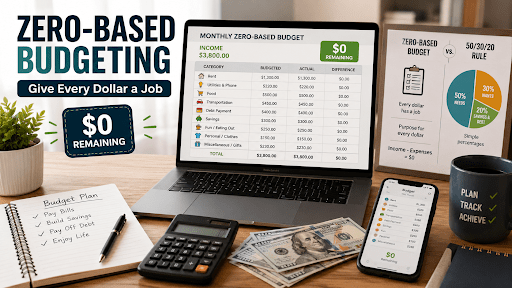
EveryDollar follows a somewhat different concept of budgeting. Created by the Dave Ramsey team, it uses zero-based budgeting, meaning that all dollars get an assignment before the start of each month. The free plan requires you to add transactions manually, which may seem exhausting at first, but allows beginners to track all expenses thoroughly.
Would you like to start quickly? We have a free budget worksheet that will help you create your first envelope budget in under fifteen minutes.
Best Zero-Based Budgeting App
YNAB stands for “You Need A Budget.” It follows zero-based budgeting principles to the letter. Each dollar earned from any source is allocated its purpose the minute it hits your bank account. Rent, food expenses, retirement, even your holiday trip. There are no dollars left unallocated.
This is not just a feature. This is a complete change in mindset. With YNAB, you are supposed to plan in advance rather than react to things that have already taken place. The monthly cost of the software is $14.99, which equals approximately $109 per year after the 34-day trial period, long enough for users to find out whether the approach works for them.
It takes some time to adjust. Users new to the platform require a couple of weeks before they begin to accept rather than fight the principles of YNAB. Once understood, however, users tend to stay loyal. The following is one of the most devoted communities in personal finance, and its customer service provides users with free workshops explaining all the basics.
Best Budgeting Apps for Couples
Money fights are one of the top reasons couples argue. Shared budgeting apps exist to fix that, or at least make the conversation easier. Honeydew and Monarch Money both let two people see the same financial picture without needing to share a single bank login.
Honeydew is free and made just for couples. Both people are free to pick which accounts to share and which not to. In Honeydew you can chat about a particular expense, set your bills reminders together, and divide expenses into categories without Excel and discussions on Sundays evening.
Monarch Money goes further. It combines couples’ budgeting with net worth tracking, investment accounts, and long-term financial goals.Yes, it is more expensive, but if you and your partner are tracking not just the bills that are paid every month, such as mortgages and retirement funds, then Monarch will offer you a complete perspective of the situation in one application rather than five.
Best Free Budgeting Apps 2026
Not everyone wants a monthly subscription just to track spending. The good news is the free tier landscape got noticeably better this year. Goodbudget’s free plan, EveryDollar’s free zero-based budgeting tool, and Empower’s free dashboard all give you real functionality without a credit card on file.
Empower stands out here. Its free plan focuses on net worth tracking and basic budgeting, and it’s genuinely useful if your main goal is seeing your full financial picture, checking accounts, investments, and debt, in one place rather than fine-tuning every spending category.
The tradeoff with free apps is usually depth. You’ll get fewer customization options, slower customer support, and sometimes ads. But for someone just starting to pay attention to their spending, free is a smart place to begin before committing to a paid plan.
There’s also a middle path worth knowing about. Some paid apps, including Monarch and Copilot, offer extended free trials of a month or longer. That’s plenty of time to test whether the paid features actually change your habits or whether a free tool would have done the job just fine. Don’t upgrade just because a free app feels basic at first. Give it a few weeks. Most of the value in any budgeting app shows up after the second or third month, once you have enough transaction history for the app’s insights to mean something.
Best Budgeting App for Families

Family budgets come with extra moving parts. Kids’ activities, school supplies, and grocery runs that somehow always cost more than planned. Monarch Money and Calendar Budget handles multi-person households well.
A family of four we spoke with switched to CalendarBudget after missing a car insurance payment they only make twice a year. The bill wasn’t forgotten because they were careless. It just wasn’t visible in a normal monthly category view. Seeing it laid out on a calendar, weeks ahead of the due date, made the difference.
CalendarBudget uses a calendar view instead of the usual category list.Upcoming bills are displayed according to their date, allowing you to budget your payments around your payday and prevent common mistakes in budgeting, such as forgetting to pay a bill that comes just twice per year, for instance, the vehicle registration fees or a yearly subscription. The price is set at $11.99 per month or $89.99 per year, with the unusual length of a free trial period included.
Monarch is worth its price for families with several incomes and plans for college saving funds on top of monthly payments.
Budgeting Apps That Sync With Your Bank Safely
Each app in this list is somehow connected to your bank account, and you should know how this happens. Each of them uses an intermediate service, such as Plaid, that helps connect your bank account and does not keep your banking password anywhere.
This access is read-only. Your application has access to your balance and transaction history but does not have the ability to make any transactions, payments or create another account in your name. Even in the case of some breach into the app’s server, a hacker would not be able to reach your money through it. Data encryption standards and this kind of read-only access are exactly what regulators, including the Federal Reserve, point to when discussing safe practices for connecting third-party financial tools to your bank accounts.
It is always better to look at the privacy policy of the app before integrating any app with it. Make sure that two-factor authentication is present and if it is then activate it because this small step will block one of the simplest ways of hacking into your account.
YNAB Alternatives Worth Trying
YNAB is not for everyone as the subscription charges accumulate over time and the zero-sum approach requires great dedication that people do not have. A few alternatives handle the same job differently.
Copilot Money offers a similar level of polish with AI-powered categorization that learns your habits over time. It’s iOS and Mac only, so Android users are out of luck, but for Apple households it’s one of the most visually clean budgeting apps available right now.
Rocket Money leans more passive. Rather than having a job for every single dollar, it looks at your spending habits and makes sensible budget categories based on what you’re really doing rather than what you feel like you need to be doing. Plus, it identifies subscription services that occur automatically and helps you unsubscribe from ones that you don’t even remember signing up for.
For those who like less structure but need advice, Rocket Money might be more appealing than YNAB’s rigid program.
Finally, there’s Simplifi by Quicken. It’s somewhere in the middle of YNAB and Rocket Money. It builds a spending plan that adjusts on its own as your bills change. At under three dollars a month, it’s also the cheapest paid option on this list, which makes it a low-risk way to try budgeting software for the first time.
Choosing the Right Budgeting App for You
There’s no single winner here. The best budgeting apps 2026 that will be of use to you solely depend on the way you handle money, not your fantasies about how you would prefer to handle money. For those who love having total control, YNAB and EveryDollar work for you. But for those who love an easy ride, Rocket Money or Monarch works. Couples should look at Honeydue first. Families juggling more moving parts will likely lean toward Monarch or CalendarBudget.
The real test isn’t which app has the most features. It’s which one you’ll still be opening in six months. Most people quit a budgeting app within weeks, and it’s rarely because the app failed. It’s because the method fought against how they naturally think about money.
Start with one question. Do you want to plan your spending before it happens or track it after the fact? That single answer rules out half the apps on this list right away. Zero-based budgeting apps like YNAB and EveryDollar are built for planners. Passive apps like Rocket Money and Empower are built for trackers. Neither approach is wrong. One just fits how your brain already works, and the other will feel like a fight every single month.
It’s also fine to switch. Plenty of people start with a free, simple app like Goodbudget, get comfortable seeing their spending clearly, and move to something like Monarch once their finances get more complicated, like a new mortgage, a second income, or investment accounts that need tracking too. The goal was never to pick the perfect app on the first try. It’s to look at your money regularly, in whatever tool makes that easiest for you.
Ready to get your spending under control? Check out our complete budgeting app comparison chart to see pricing, features, and platform support side by side before you commit to one.
Frequently Asked Questions
What’s the best budgeting app for tracking subscriptions?
Rocket Money. It’s built around catching recurring charges you’ve forgotten about, and it’ll even help you cancel them. That one feature alone tends to pay for the subscription itself over a year.
Can budgeting apps work for irregular income?
Zero-based apps like YNAB actually handle this better than most people expect, since you’re assigning jobs to dollars as they show up rather than planning around a fixed paycheck. Freelancers tend to gravitate toward it for that reason.
Which budgeting app is best for families?
Monarch or CalendarBudget, depending on what you’re solving for. CalendarBudget’s calendar layout is genuinely good at catching bills you only pay once or twice a year. Monarch is the stronger pick if you’re also tracking something long-term, like college savings.
What is the best zero-based budgeting app?
YNAB, without much competition. Every dollar gets assigned a job as soon as it arrives. EveryDollar runs on the same idea and is a cheaper, gentler way to test the method before you commit to YNAB’s price tag.
What is an envelope budgeting app and how does it work?
It’s a budgeting app that splits your income into virtual envelopes, rent, groceries, fun money, and so on, and once an envelope’s dry, you stop spending in that category. Goodbudget is the clearest example. It’s less about math and more about seeing the limit right in front of you.
Are there good YNAB alternatives?
A few. Copilot Money if you’re on Apple and want something AI-driven and polished. Rocket Money if you’d rather it just watch your habits instead of asking you to assign every dollar. Simplifi by Quicken sits in the middle, and it’s the cheapest of the three.